

A conversation with Katherine Drake Stowe, Senior Director of Collaboration and Partnerships at the United Soybean Board, on farm roots, checkoff strategy, and why Nebraska research matters nationally.
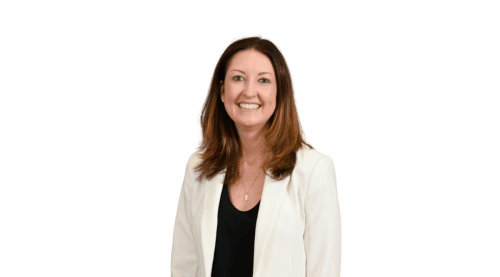
Katherine Drake Stowe grew up on a tobacco farm in eastern North Carolina, where agriculture wasn’t abstract — it was the work that kept her family going. She went to NC State planning to study chemistry and put some distance between herself and farming. She now admits, it didn’t quite work out that way.
She ended up earning her master’s and PhD in plant breeding and genetics, and has spent her career since doing what she couldn’t seem to stop doing: connecting research back to the real world, and back to farmers. At the United Soybean Board (USB), her job is to make sure those pieces are all pointed in the same direction.
Nebraska Soybean Board (NSB): What makes the checkoff different from other research funding structures?
Katherine Drake-Stowe: The farmers who contribute to the checkoff are also the ones making decisions about what to fund. Every dollar invested comes out of a farmer's operation, so there's real accountability. The work has to have a path back to the farm — whether that's generating additional demand or producing research that farmers can actually put to work.
NSB: How do USB and state soybean boards like NSB work together to identify and prioritize research?
Katherine Drake-Stowe: State soybean boards are closest to the farmer. They’re the boots-on-the-ground first voice to identify what’s actually going on. From there, it can be built up and accelerated at the national level. The most powerful thing is when states and USB are working collaboratively, not duplicating efforts, but leveraging each other’s resources to amplify the work in a way no single organization could do alone.
In my role, I've reviewed Nebraska's research proposals — making connections, flagging overlap, and identifying where Nebraska could fill a real gap. Nebraska’s researchers are strong and well respected across the U.S., and the work they’re doing matters well beyond state lines."Every dollar invested in the checkoff comes out of a farmer's operation. The work has to have a path back to the farm." - Katherine Drake Stowe, Senior Director of Collaboration and Partnerships, USB
NSB: What Nebraska research has stood out to you?
Katherine Drake-Stowe: Nebraska has been a leader in seed composition work, understanding the physiology behind traits like fatty acid profiles. As the biofuels market grows, that research becomes increasingly valuable.
Nebraska has also been a leader in soybean gall midge research. Because that pest is spreading across the Midwest, other states haven’t had to work through the same unknowns. They can start from a much higher baseline. That’s what good collaboration looks like.
NSB: How have research priorities evolved, and how does demand factor into what the checkoff funds?
Katherine Drake-Stowe: We can't just keep funding the same things — farming has changed, and the checkoff has to change with it. There's a real opportunity to think beyond creating more bushels and focus on what those bushels are being used for and how we add value to what's being produced. That changes how we think about the research portfolio, and how we bridge production and demand in a way that ties one back to the other.
NSB: What would you want Nebraska farmers to know about the people behind these investments?
Katherine Drake-Stowe: Farming right now is genuinely hard. A lot of operations are running in the red, and yet farmers continue to invest in research that’s going to benefit the whole industry. That takes real belief in something bigger than yourself.
Being part of the process that connects their needs to research, to innovation, to markets — it's a true honor and I consider myself incredibly lucky to do this work, and I don’t take the trust behind it lightly.